
Employers can’t trust what they read anymore
91%of US recruiters claim finding deceptive applications
Generative AI can now write resumes, CVs, and cover letters with a single prompt.

Greenhouse, 2025 AI in Hiring Report
A platform that prepares students for a career, not just a degree.
Critical Point Software is building Project Keystone: a platform that builds a student’s unique profile in real time, prepares them for the career ahead, and gives employers an applicant profile they can trust in the age of AI.
Generative AI can now write resumes, CVs, and cover letters with a single prompt.
Greenhouse, 2025 AI in Hiring Report
Most students don’t think about their career path until it’s time to apply.

Lumina Foundation and Gallup, “Aligning Education and Work,” employer survey of 2,000, March 2026.
New federal rules cut off student loans to programs whose graduates earn too little.

New York Fed, The Labor Market for Recent College Graduates, February 2026; One Big Beautiful Bill Act, signed July 4, 2025.
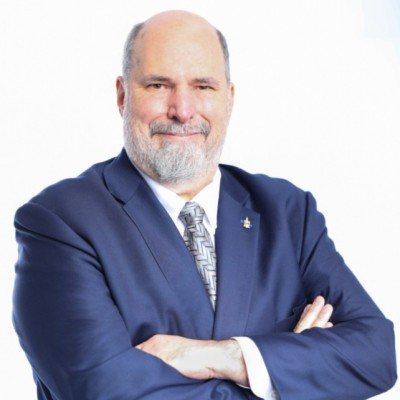
Art Morrish
Former director of DARPA, VP of Raytheon, and CEO of Aspire
From a business perspective, I love the idea of hiring someone who has focused on maximizing their skills and experiences, not their GPA.”
“I think building a way to maximize skills is a fantastic idea.”
“In my experience, hiring new graduates meant training for upwards of a year before they really started providing value.”
In conversation with Eric Wolfson, 2026. Quoted with permission.
Every item on a record carries its source. Only items the university backs are marked verified. Verified items are designed to be issued as Open Badges and W3C Verifiable Credentials, so an employer can check one without calling the registrar.
Every item on a record is either self-reported or verified by the university. The platform is designed as three parts around that record.
Framing from the September 2026 company overview.
Four levels, from the student's own word to the university's signature.
The student wrote it. Nobody else has checked it. It stays on the record, because a person is more than their coursework.
Brought in from another system, with its original label kept.
An instructor or adviser looked at the work and confirmed what it shows.
The university signs it, and that signature stays with the record.
The four levels from the September 17 workshop and copy deck version 4.
One founder knows the schools and students. The other knows the systems.

Co-founder and CEO

Co-founder and technical lead
Five phases. Each one unlocks the next inflection point.
Phase 0
Phase 1
Phase 2
Phase 3
Phase 4
Let’s talk about how this can help your school.