Problem
The handoff from college to career isn’t working.
Employers are overwhelmed by AI-generated applications. Universities are under pressure from all sides. And students are preparing for a degree instead of a career.
Employers can't trust what they read anymore
Greenhouse, 2025 AI in Hiring Report
Generative AI can now write resumes, CVs, and cover letters with a single prompt. Candidates apply en masse. The job market is flooded, and the deception is painfully obvious.
- AI tunes every resume until they all sound the same
- Hidden text slipped in to fool the software that screens resumes
- AI interviewers get quizzed by candidates running their own AI
- A whole new category of tools exists just to catch this
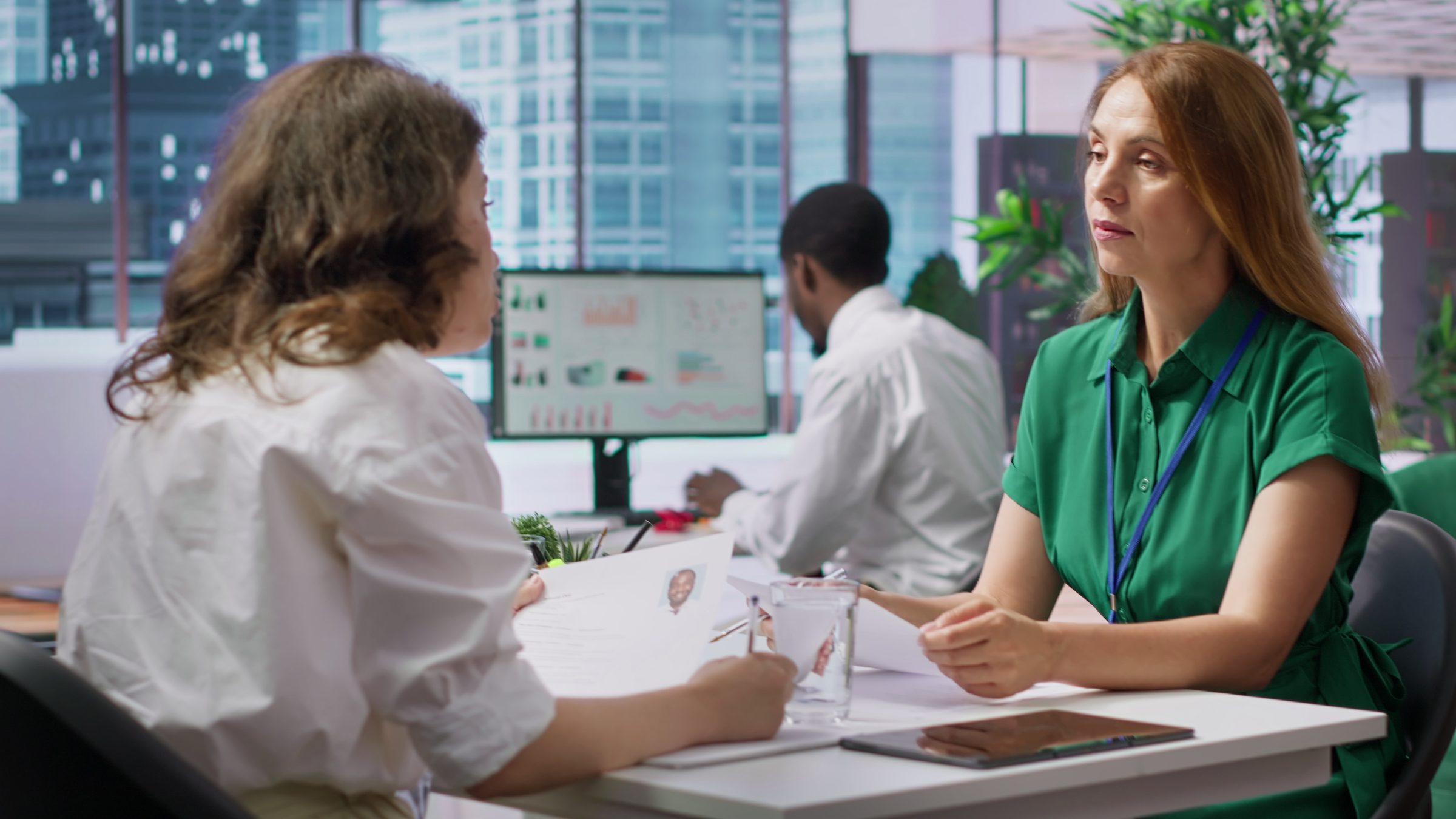
Students are being prepared for a degree, not a career.
Lumina Foundation and Gallup, "Aligning Education and Work," employer survey of 2,000, March 2026.
Most students don't think about their career path until it's time to apply. By then, their profile reads like everyone else's. Employers want to see the skills behind the degree.
- Career direction doesn't show up until it's time to apply
- Similar profiles make it hard to stand out
- A degree alone doesn't prove you can do the work

Universities are being asked to prove a degree pays off.
Federal Reserve Bank of New York, The Labor Market for Recent College Graduates, February 2026. Median annual wages, full-time workers aged 22 to 27, 2024. One Big Beautiful Bill Act, signed July 4, 2025.
New federal rules cut off student loans to programs whose graduates earn too little. Families want to know what a degree leads to before they enroll, and an estimated placement rate is no longer enough.
- Shrinking confidence that college pays off
- Outcomes measured by surveys few graduates answer
- No view of which skills employers valued in the graduates they hired

Why now
Software now writes the resume, the cover letter, and the first-round interview answers.
74% of US hiring managers worry more about fake credentials than the year prior. Hiring teams need a way to tell a real record from a generated one.
Greenhouse, 2025 AI in Hiring Report
Programs are starting to be held accountable for what their graduates earn.
Confidence in higher education fell from 57% in 2015 to 38% in 2026. Students and families now weigh the cost of college against what it leads to. A university that can show what its students did, and where that work took them, has an answer ready.
Gallup, July 13, 2026. One Big Beautiful Bill Act, signed July 4, 2025.
Both pressures point to the same missing thing: a record of student work that an institution stands behind.
What's out there today, and what isn't.
Instructure owns two of these columns and still doesn't connect them.
Learning platforms, experience programs, credential issuers and resume builders each cover part of the job. We compared them on the six things a trustworthy record has to do.
| Learning platformsCanvas | Experience programsForage | Credential issuers and verifiersAccredible · Parchment (owned by Instructure) · National Student Clearinghouse | Resume buildersTeal | Note | |
|---|---|---|---|---|---|
| Holds the work as it happens | |||||
| Turns work into application language | |||||
| Someone vouches for the claim | |||||
| An employer can verify it | |||||
| The profile builds automatically | Project Keystone is designed around these two. | ||||
| Employer feedback returns to the program |
Our September 2026 review of public product material.