Universities get program-level outcome data
Student activity and outcome data, program by program, and a view of which skills employers value most.
An annual subscription, scaled to the student body.
How it works
What Project Keystone is designed to do for the student, the university, and the employer, and who pays for it.
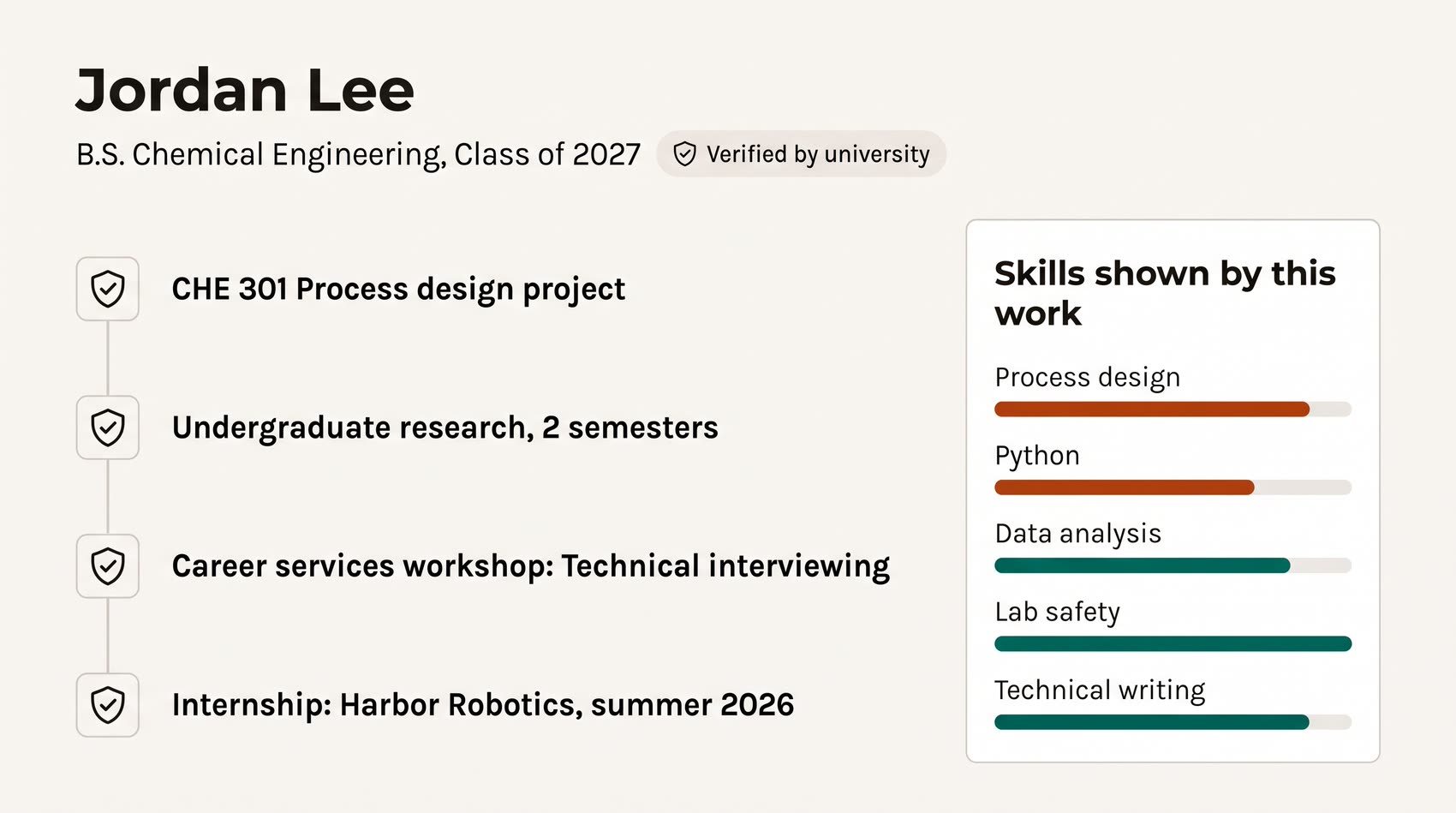
Every item on a record carries its source. Only items the university backs are marked verified. Verified items are designed to be issued as Open Badges and W3C Verifiable Credentials, so an employer can check one without calling the registrar.
Every item on a record is either self-reported or verified by the university. The platform is designed as three parts around that record.
Framing from the September 2026 company overview.
Four levels, from the student's own word to the university's signature.
The student wrote it. Nobody else has checked it. It stays on the record, because a person is more than their coursework.
Brought in from another system, with its original label kept.
An instructor or adviser looked at the work and confirmed what it shows.
The university signs it, and that signature stays with the record.
The four levels from the September 17 workshop and copy deck version 4.
Each profile is designed to fill in as the student completes trainings, earns departmental recognition, and collects endorsements from work experience.
Students can add their own items to the profile. Only items the university backs will be marked verified.

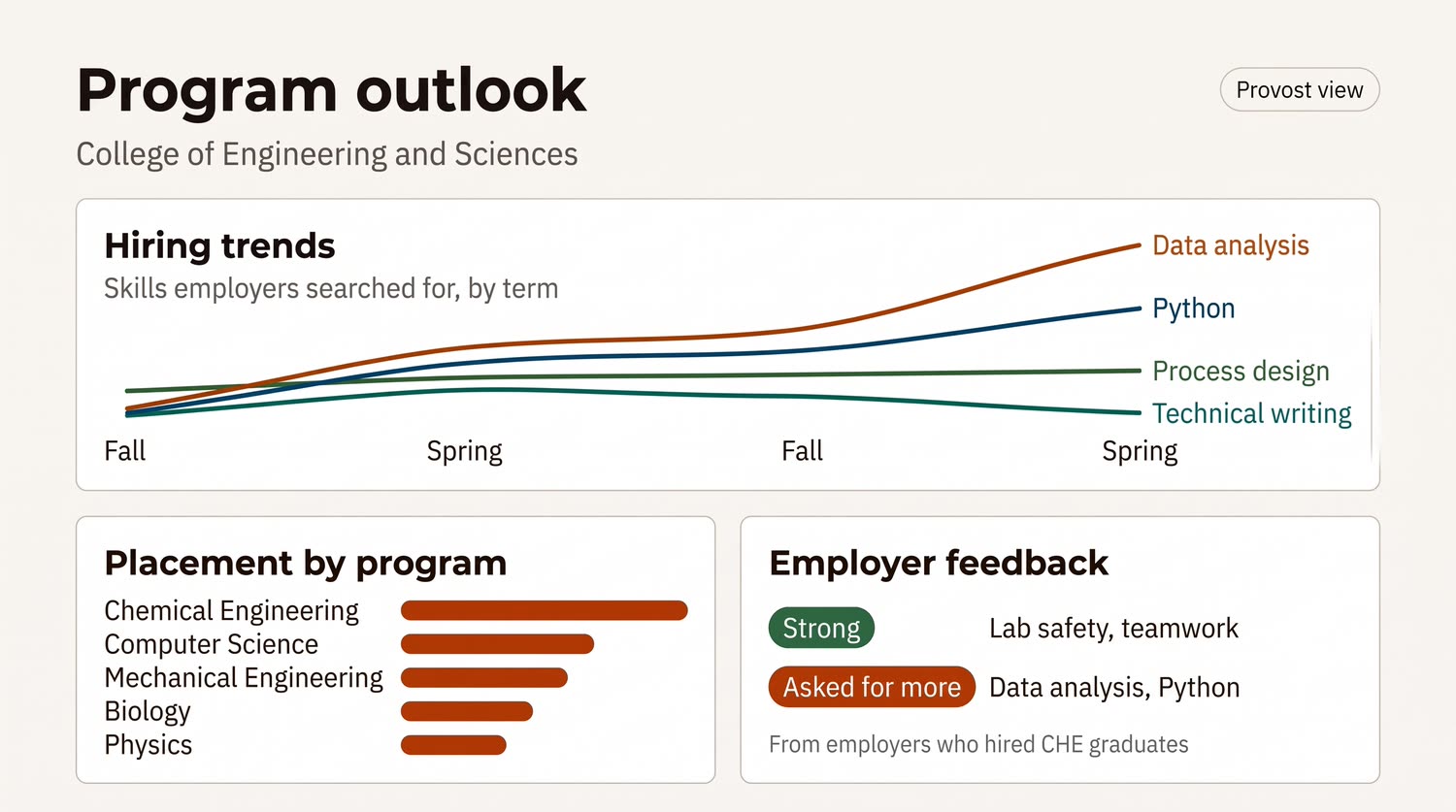
Hiring trends, placement, and employer feedback, program by program.
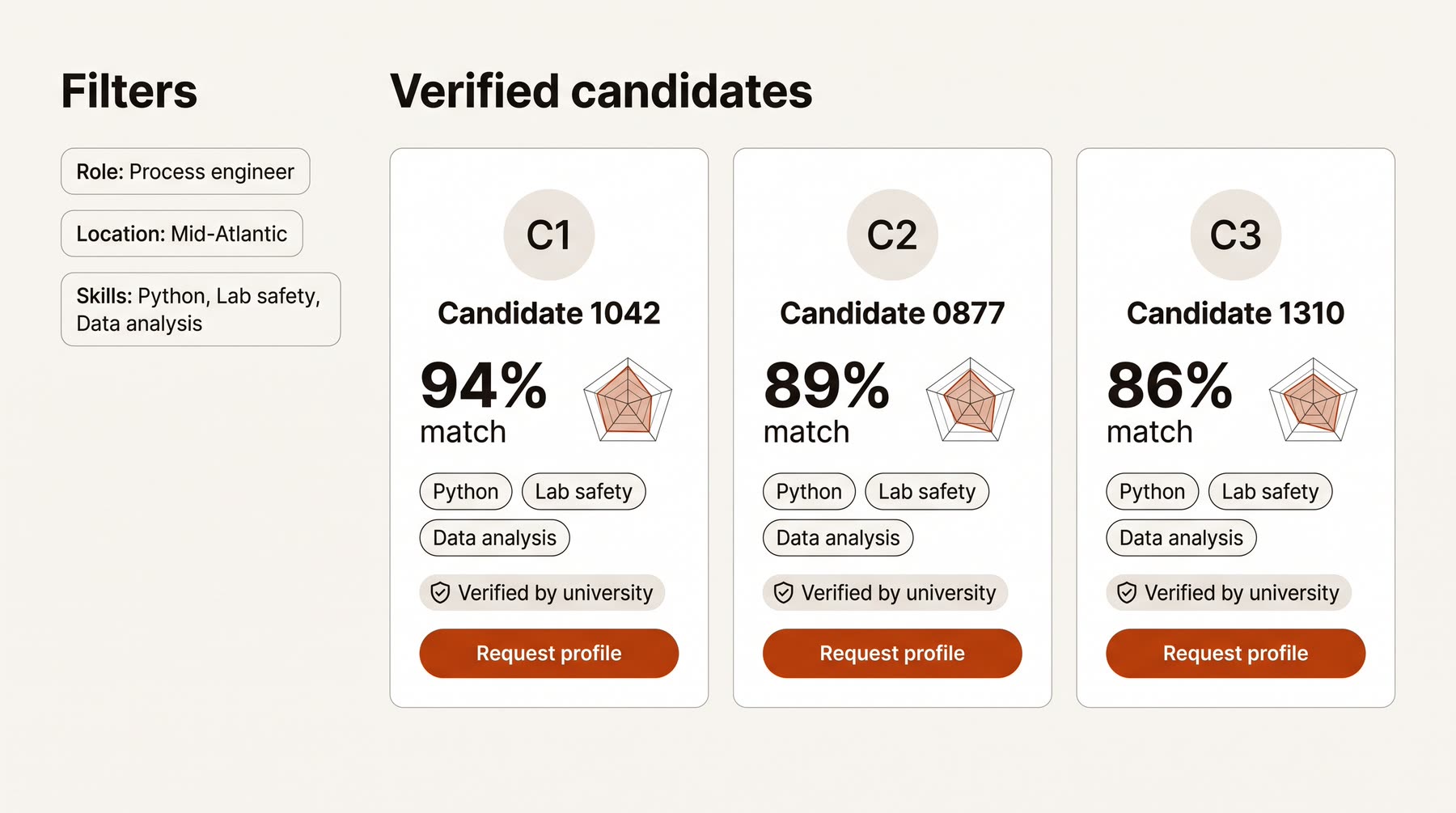
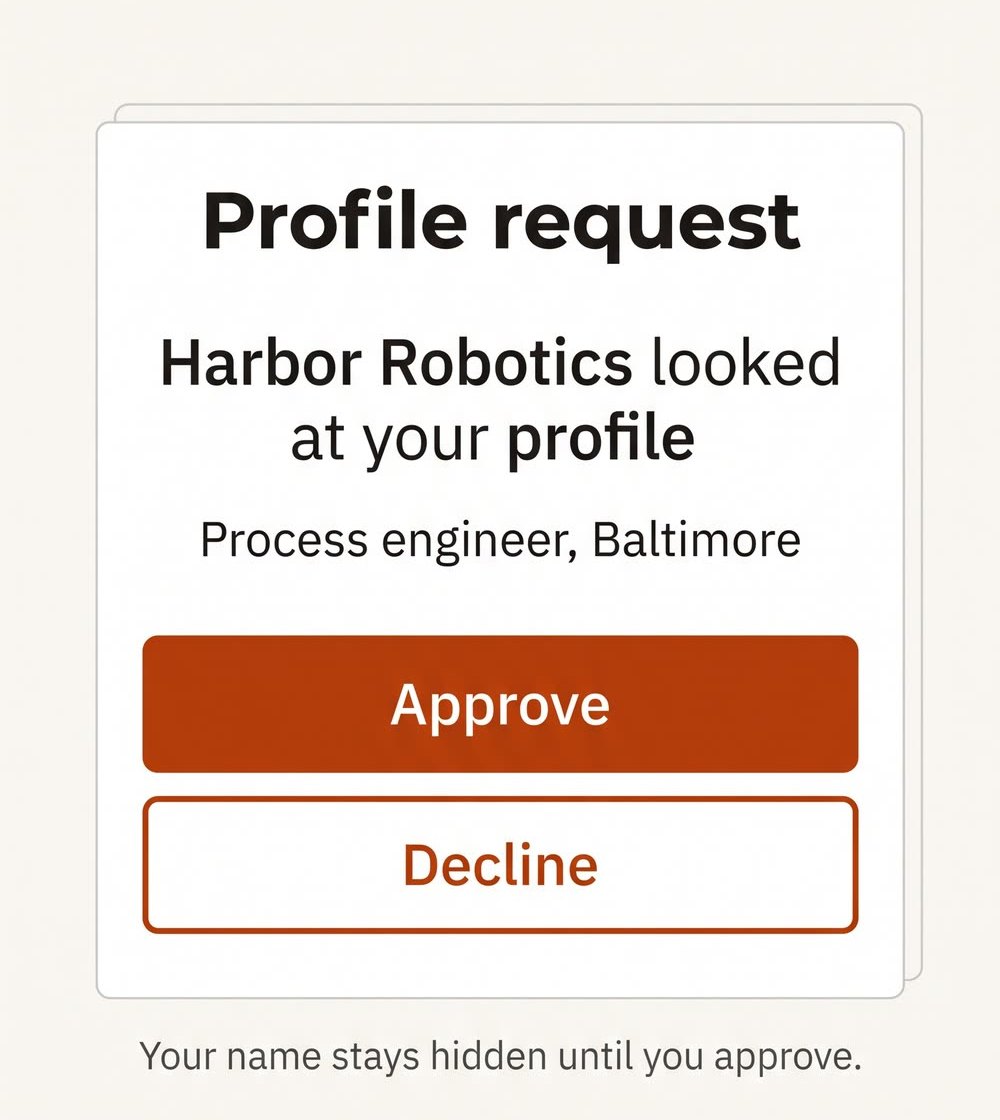
Today, a student sends hundreds of applications and often hears nothing back. Project Keystone is designed to work the other way: approved employers see anonymous profiles sorted by fit, request the ones they want, and the student decides whether to share.
Career services signs the trainings it already runs
Student records fill as the work happens
Approved employers search those records
Starting point: career-services and student-success leadership at four-year schools.

Student activity and outcome data, program by program, and a view of which skills employers value most.
An annual subscription, scaled to the student body.
Career direction, skill building, and a profile that grows with them.
A ranking decides who gets a call. It has to be right before anyone relies on it.
Everything that can raise a student's standing will come from their own university, with the accommodations that university already provides.
Who sees a profile, and when contact details are released, will always be the student's decision.
Accessibility compliance is required, so it is part of the design from the first screen.
Project Keystone is designed to run on the standards universities and employers already use, so adopting it will not mean replacing anything.
Opens inside the learning system
It is designed to launch through LTI, the connection standard campus learning systems already support.
Open standards, not invented ones
Records are designed to be issued as Open Badges and W3C Verifiable Credentials.
Skills in words employers already use
Skill tags will use standard language (O*NET, ESCO and NACE), so employers read them the same way from the start.
Sign in with your campus account
Students and staff will sign in with the account they already have.
Outside work arrives labelled
A completion from another provider will keep the record of where it came from.
The university's data stays the university's
Institution content and student records will stay separate, by design.